Built to Fly, Designed to Last
Constellium at AeroMat 2026

Industry Insights
At AeroMat 2026, where the aerospace community will gather to explore the latest advances in materials and processes, one message stands out clearly: the future of flight will be shaped as much by what happens on the ground as in the air. From circularity at aircraft scale to next-generation alloys and industrial readiness, Constellium’s contributions highlight how material innovation is redefining both performance and sustainability across the value chain — starting with the metal itself.
Why does sustainable aviation start on the ground, with the metal itself?
The aviation industry has set bold climate targets and achieving them will take more than cleaner engines or smarter operations. It requires rethinking sustainability at its source, beginning with the materials that form every aircraft, from the very first step of the value chain.
Material choices made on the ground determine performance in the air. By providing lighter structural components, we help reduce aircraft weight, which directly improves fuel efficiency and lowers CO₂ emissions in operation. As the industry advances toward sustainable aviation fuels and new propulsion technologies, our materials are designed to support that transition.
And while weight reduction is critical for the aircraft’s operational lifetime, aluminum’s contribution to sustainable aviation goes far beyond being lightweight.
Circularity at aircraft scale: what aluminum can actually do
Aluminum is one of the few structural materials that can be recycled indefinitely without loss of performance, and recycling it requires only 5% of the energy needed to produce primary aluminum. Looking at the whole life cycle and at aircraft scale, this is not a marginal gain. It's a systemic lever.
Circularity doesn't stop at our plant gates. We collect and reintegrate our own production scrap, and work with our customers to recover and recycle their processing offcuts and machining swarf as well, targeting no waste of high-value material.
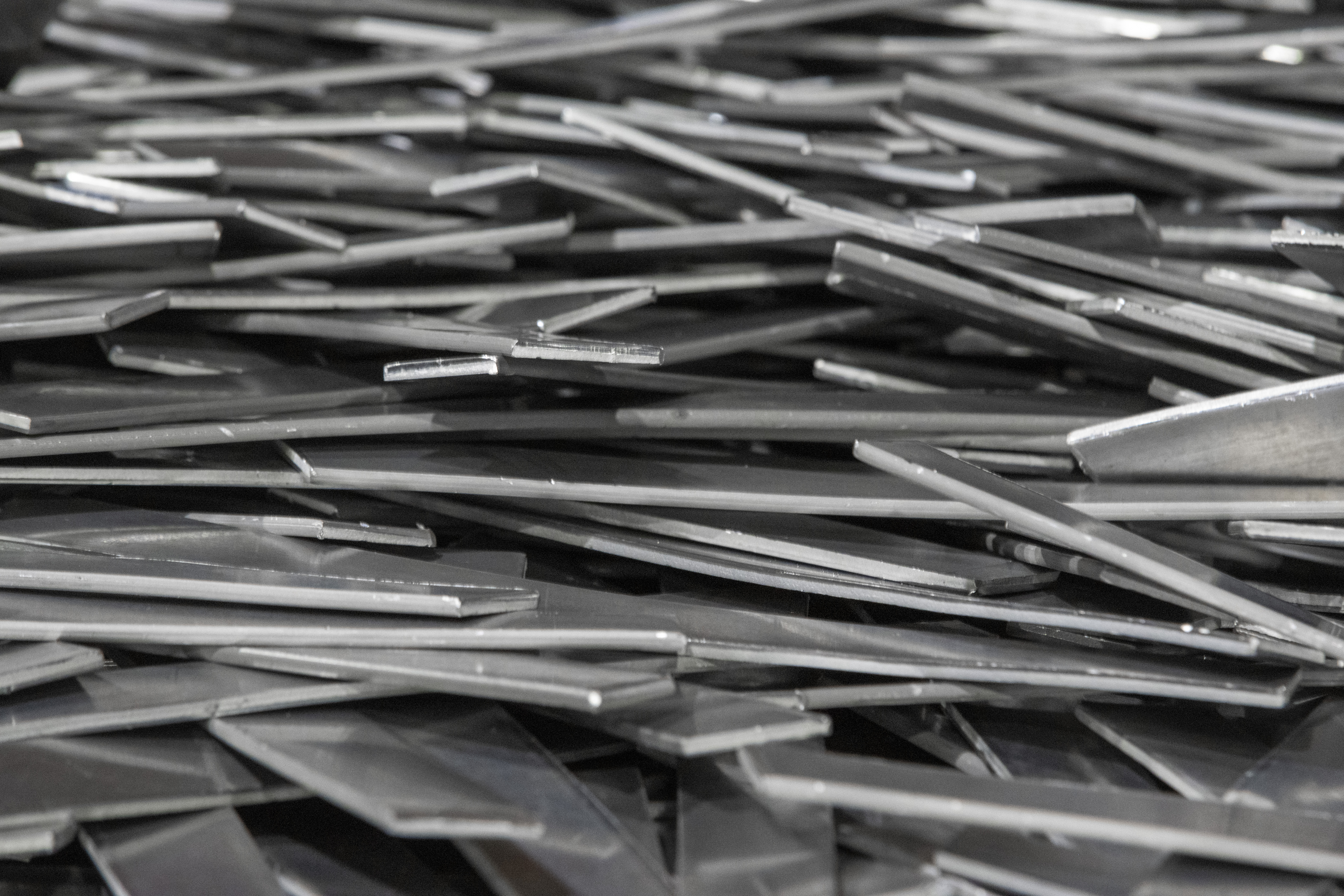
And we've taken end-of-life recyclability from concept to validation. Together with TARMAC Aerosave, a leading aircraft storage and recycling specialist, we have successfully produced aluminum ingot entirely from end-of-life aircraft, reaching the quality required for aerospace use. This effort demonstrates that material from a dismantled aircraft fuselage can be recycled for use in new fuselage products, with no performance compromise. While more work is needed, this breakthrough confirms the viability of a fully circular model in aviation, and aluminum's critical role in making it real.
This circularity-by-design approach is central to how we define sustainability, not as a constraint, but as a source of competitive differentiation for the aerospace supply chain.
Lightweight metallic wings: ready for high build rates and sustainability targets
As major OEMs ramp up production rates, material selection becomes a critical industrial decision, not just a technical one. Advanced aluminum alloys for wing structures offer something rare: they combine the performance needed to meet aggressive weight and structural targets with the supply chain maturity required for high-volume manufacturing. Aluminum is today the only structural material with proven readiness for targeted production rates exceeding 70 aircraft per month.
Constellium's work on metallic wing solutions - including our research and development of the Metallic Wing of the Future project - demonstrates that lightweight aluminum is not a legacy option. It is a high-build-rate-ready, sustainability-compatible answer to the challenges facing next-generation narrowbody and widebody programs.
Advanced Air Mobility: aluminum at the frontier of a new market
The Advanced Air Mobility (AAM) sector, encompassing eVTOLs, urban air taxis, and regional electric aircraft, is not just a new market. It's a new set of engineering constraints: ultra-low structural weight, low altitude aerodynamics, high-voltage and thermal management, cost-sensitive industrialization, and production volumes that will scale fast. Beyond those engineering challenges, AAM holds the promise of transforming urban travel and logistics, making it safer, more efficient, and more accessible. Delivering on that promise quickly requires materials that are ready today.
Advanced aluminum materials are uniquely positioned to support this ramp-up. Constellium’s advanced aerospace solutions combine high specific strength, excellent fatigue performance, and proven industrial maturity. For AAM manufacturers, this means relying on materials and production know-how already demonstrated in demanding aerospace applications, helping accelerate the transition from prototype to industrial-scale production. Constellium's advanced aluminum solutions are already flying on multiple certified programs, bringing a level of qualification maturity that emerging AAM platforms need to accelerate their own certification paths. In a market where cost-effectiveness and time-to-certification both matter, this is a decisive advantage.
Constellium Airware® 2050: from commercial aviation to space launch systems
Versatility is one of the most underrated qualities in aerospace materials. Constellium Airware® 2050, our advanced aluminum-lithium plate product, has been developed to answer a wide spectrum of structural demands, from the critical components of commercial aircraft to space launch vehicles and crew modules.
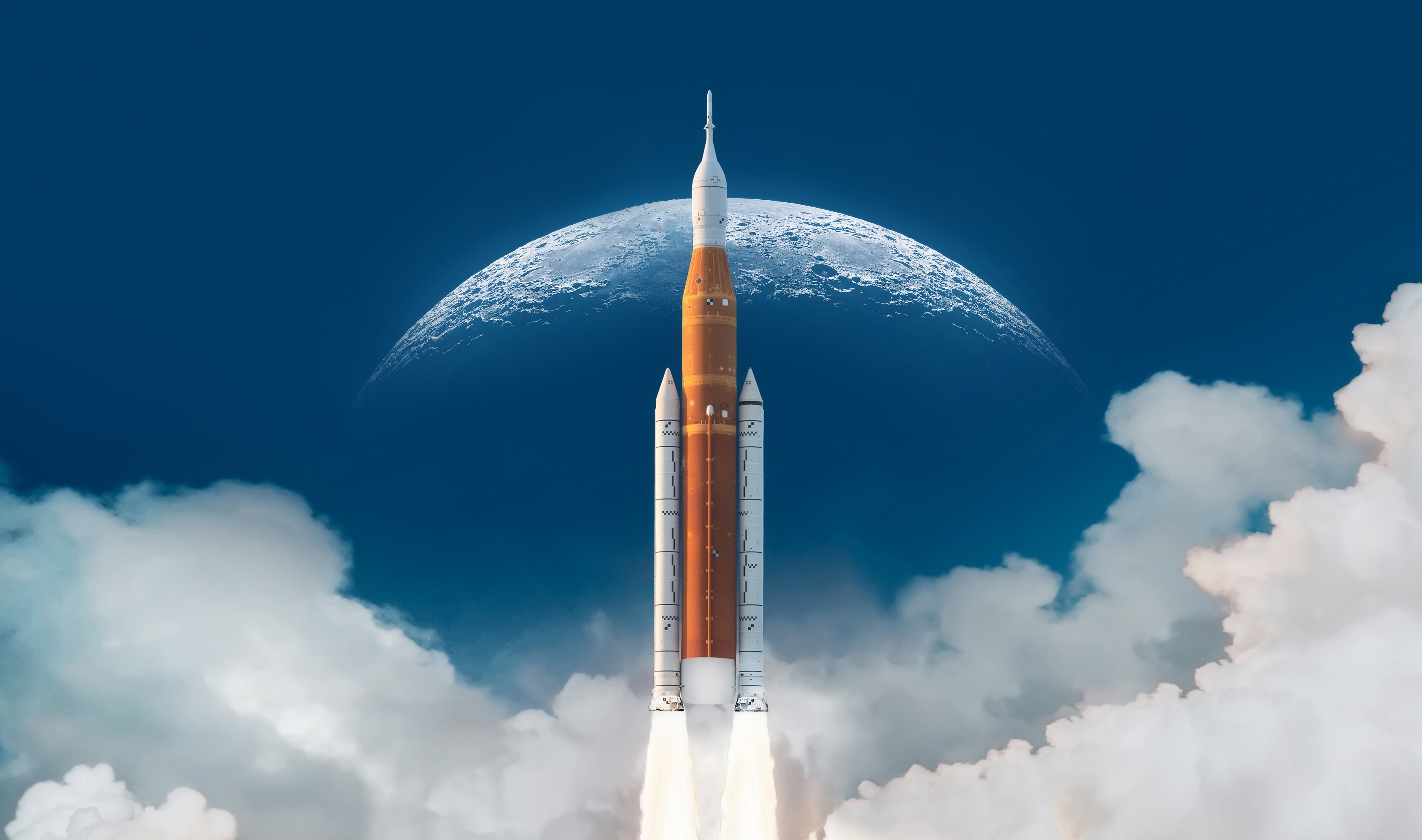
Airware® 2050 delivers an exceptional combination of strength, damage tolerance, and density reduction. Its low density and excellent mechanical properties at elevated and cryogenic temperatures make it a material of choice for cryogenic propellant tanks and other applications in space launch systems. The recent development of 2050 in O temper, and user-heat treated T62 temper confirms the product’s versatility across product forms and tempers. 2050 T62 use for domes and bulkheads in the space launch industry offers many advantages over legacy 2219 T62. This gives designers and manufacturers the flexibility to optimize structural performance without multiplying alloy qualifications, which is a significant advantage in today's resource-constrained development environments.
Our ongoing collaboration with Lockheed Martin and NASA on Friction Stir Welded (FSW), spun-formed and high-energy hydroformed domes illustrates what this alloy can achieve when paired with advanced manufacturing processes and reinforces Constellium's commitment to co-developing solutions alongside our customers.
NASA’s Chief Engineer of the Moon to Mars mission, Tyler Nester, a recent guest to the Constellium Ravenswood plant, will be a keynote speaker highlighting lessons learned from the Artemis ll mission.
📍 Meet Constellium at AeroMat 2026 — West Palm Beach, June 2–4
We are proud to be presenting five papers at AeroMat 2026, covering the full breadth of these topics:
- Circular metallic wing concepts for next-generation sustainable aircraft - Jean-Philippe Masse, Frank Eberl, Belen Davo, Sylvain Gaudion, Thomas Brard
- Fully circular metallic lightweight airframe solutions to achieve sustainable flight - Frank Eberl, Guillaume Bes, Miguel Pinedo
- High Energy Hydroforming Friction Stir Welded 2050 Al-Li Blanks for Aerospace Domes and Cones - Dr. Michael Eller, Dr. Wesley Tayon, Michael Niedzinski
- Development of 2050 T62 for spin forming and similar applications - Michael Niedzinski, Peter Bittner
- Aluminum Solutions for Advanced Air Mobility - Scott Buchwald, Paul Smith, Sebastien Leclerc, Ricky Whelchel, Bernard DeMestral,
In addition, Tim Warner, Constellium’s Scientific Director, will participate in the panel session dedicated to the impact of Artificial Intelligence in our industry.
These presentations reflect our conviction that the future of aerospace materials is being written now and that aluminum, when engineered with ambition, has a central role in that story.
To meet our team at Aeromat 2026, contact Paul Smith, Global CAE Leader for Aerospace.